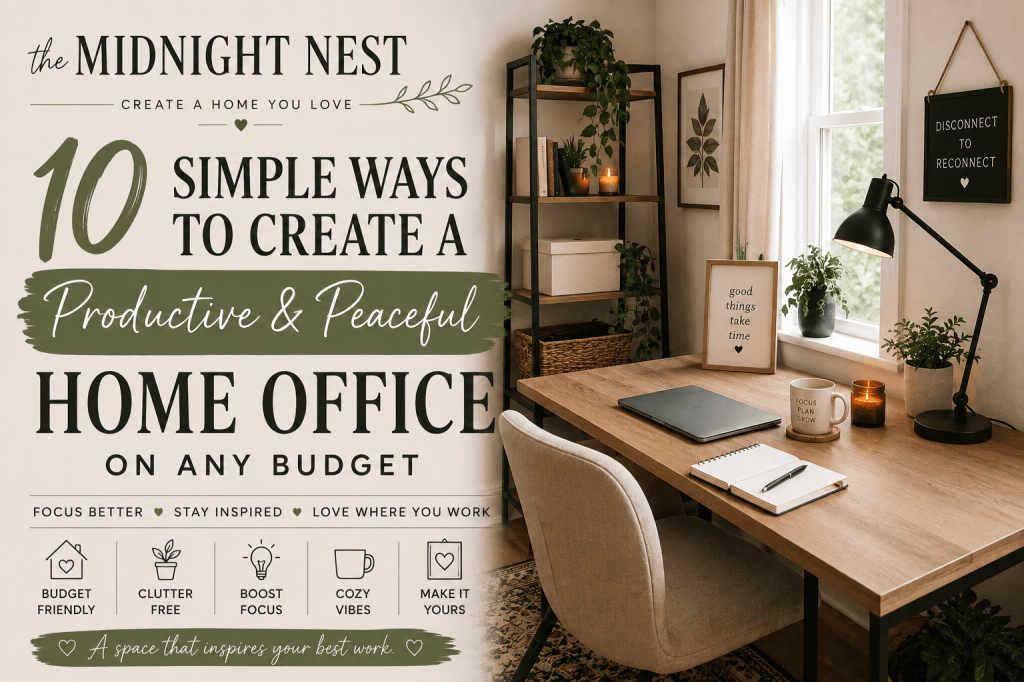
A home office does not need custom built-ins, designer furniture, or a perfectly styled spare room to help you do your best work. Whether you have an entire office, a corner of the bedroom, or a small desk tucked into the living room, a few thoughtful choices can make the space feel calmer, more comfortable, and much easier to actually use.
The goal is not to create a showroom. It is to build a workspace that supports the way you really work while still feeling like part of your home. Start with function, add comfort, control the clutter, and then layer in the details that make you want to sit down and stay awhile.
1. Start With the Best Location You Already Have
Before buying anything, pay attention to where you naturally feel most alert and comfortable during the day. If you have a choice, look for a spot with useful daylight, enough room to sit comfortably, access to an outlet, and at least some separation from the busiest part of the house.
If your office has to share another room, create a visual boundary. A rug, bookcase, narrow console, curtain, or even the direction your desk faces can make one corner feel like a dedicated workspace instead of a laptop temporarily sitting in the bedroom.
2. Spend Your Money on the Chair Before the Decor
A beautiful workspace stops being beautiful very quickly when your back, shoulders, or neck are miserable. If you regularly spend hours at your desk, prioritize a chair that fits your body and allows you to work in a comfortable position.
You do not necessarily need the most expensive ergonomic chair on the market. Look for useful adjustability, adequate support, a seat depth that works for you, and a height that lets you position yourself appropriately relative to the desk. If the chair is functional but not particularly pretty, the rest of the room can handle the aesthetics.
3. Position Your Screen and Keyboard for Comfort
A laptop is convenient, but using one flat on a desk for long stretches can encourage an uncomfortable working position. A laptop stand or monitor riser can bring the screen closer to a comfortable viewing height; pair it with an external keyboard and mouse when practical.
You can also improvise a riser with sturdy books while deciding whether a dedicated stand is worth buying. The point is not the accessory itself—it is creating a setup where you are not constantly folding yourself toward the screen.
4. Layer Your Lighting
Overhead lighting alone can make an office feel flat or harsh, especially in the evening. Use natural light when it is available, then supplement it with a task lamp where you read, write, or work with your hands. A softer lamp elsewhere in the room can make the entire workspace feel less clinical.
Be mindful of glare on computer screens and place lamps where they illuminate the work rather than shining directly into your eyes. Good lighting is both a practical tool and one of the easiest ways to make an inexpensive office feel intentionally designed.
5. Get the Cords Under Control
Few things make a workspace look chaotic faster than a nest of charging cables, power bricks, and extension cords. Cable clips, reusable ties, an under-desk cable tray, or a simple cord box can clean up the visual noise without changing the furniture.
Label chargers if several devices use similar cords and keep only the cables you regularly need at the desk. A calmer surface makes it easier to focus and makes the whole room look more polished for very little money.
6. Give Every Everyday Item a Home
Organization works best when it matches your habits. If you constantly reach for pens, a notebook, headphones, chargers, and sticky notes, those items should have easy-to-reach homes. Things you use once a month can live farther away.
Use drawers, baskets, boxes, trays, or vertical organizers to contain categories instead of covering every surface with individual objects. Before buying organizers, declutter first; otherwise you may simply spend money creating prettier containers for things you do not need.
7. Add Something Living
A small plant, vase of clipped greenery, or even a convincing faux plant can soften all the straight lines and electronics that tend to dominate a workspace. Greenery is especially useful when your office occupies a corner of another room because it helps the desk feel integrated into the rest of the home.
If you choose a live plant, match it to the actual light conditions rather than buying solely for appearance. A struggling plant is not particularly peaceful.
8. Keep the Color Palette Simple
A productive office does not have to be beige, but limiting the number of competing colors can make a small workspace feel more cohesive. Start with the colors already present in the room, then repeat one or two accent colors through storage, artwork, textiles, or desk accessories.
This is particularly helpful when your office shares a bedroom or living room. Repeating the room’s existing finishes makes the work zone feel like an intentional part of the space rather than office furniture dropped into the middle of it.
9. Make Room for Something Personal
Productive does not have to mean sterile. A framed photograph, small piece of art, favorite mug, candle, meaningful object, or beautiful notebook can make the desk feel like yours. Choose a few things you genuinely enjoy rather than filling every available inch with generic office decor.
If visual clutter distracts you, keep personal pieces on a shelf or wall instead of directly on the work surface. You still get the personality without sacrificing usable desk space.
10. Create a Five-Minute Closing Routine
One of the cheapest home-office upgrades costs nothing: reset the space before you finish for the day. Put away loose papers, return supplies to their homes, clear cups and dishes, plug in anything that needs charging, and write down the first task for tomorrow.
That tiny routine prevents yesterday’s mess from becoming tomorrow morning’s first problem. It also creates a psychological ending to the workday, which can be especially useful when work and home happen under the same roof.
What Should You Buy First for a Home Office?
If you are starting from scratch, buy according to the problems you actually need to solve. For most people, that means a stable work surface, a comfortable chair, appropriate lighting, and whatever equipment the work itself requires. Storage and decor can come later.
Measure before ordering furniture, especially in small rooms. A compact desk that leaves enough space to move comfortably is usually more useful than an oversized desk that technically fits but makes the room difficult to live in.
How to Make a Home Office Look Expensive Without Spending Much
Consistency does more for a budget office than expensive accessories. Hide cables, reduce clutter, repeat a small number of finishes, use warm layered lighting, choose appropriately scaled furniture, and leave some empty space. A thrifted lamp and simple framed art can look far more polished than a desk crowded with trendy accessories.
For more low-cost styling ideas, see our 12 Affordable Ways to Make Your Home Look Expensive. If your workspace is squeezed into a small room, many of the ideas in our small-space decorating guide apply to home offices too.
Build the Office Around the Way You Work
The best home office is not necessarily the one that photographs beautifully. It is the one where you can find what you need, sit comfortably, focus when it is time to work, and walk away when the workday is finished.
Start with the biggest source of friction in your current setup and fix that first. Then improve the space one piece at a time. A peaceful, productive workspace is much more about thoughtful choices than a large decorating budget.
 The Midnight Nest
Leave a comment