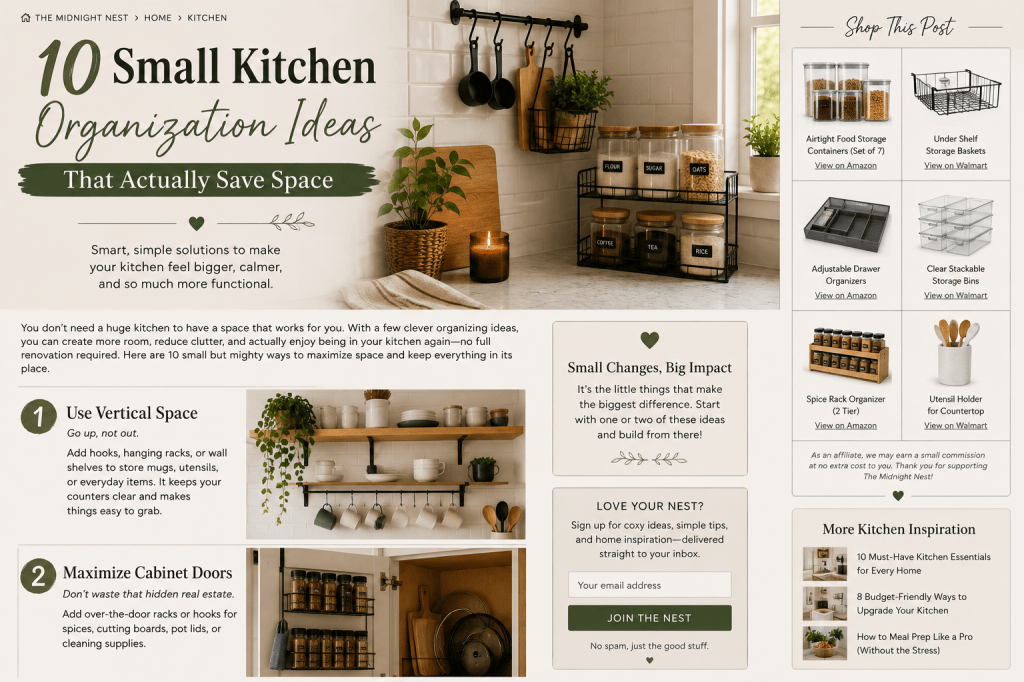
A small kitchen can feel crowded surprisingly fast. When counter space is limited and every cabinet has to work overtime, the answer usually is not squeezing in more stuff—it is making the storage you already have easier to see, reach, and use.
The best small-kitchen systems take advantage of wasted height, awkward doors, deep cabinets, and narrow gaps while keeping everyday tools close to where you actually use them. These ten ideas can work in apartments, older homes, tiny kitchens, and anywhere else that needs more function without a full renovation.
1. Declutter Before You Buy Organizers
Start with the least glamorous step: take stock of what is occupying your limited storage. Duplicate utensils, expired pantry food, mugs you never reach for, mismatched food-storage pieces, and appliances you rarely use can consume an astonishing amount of space.
Do one zone at a time so the project stays manageable. Once you know what actually needs a home, you can choose organizers based on a real storage problem instead of buying bins and hoping they somehow create more room.
2. Double Cabinet Space With Shelf Risers
Cabinets often waste the empty vertical space above short stacks of dishes, mugs, canned goods, or pantry staples. A freestanding shelf riser creates another usable level without changing the cabinet itself.
This works especially well when stacking items directly on top of one another would make the bottom layer difficult to reach. Measure the cabinet before buying a riser, including the usable height between shelves, so the organizer solves the problem rather than becoming another awkward object inside the cabinet.
3. Use the Inside of Cabinet Doors
The back of a cabinet door is valuable real estate in a small kitchen. Depending on the door and available clearance, lightweight racks, hooks, or holders can store measuring spoons, cleaning gloves, pot lids, wraps, cutting boards, or other slim items.
Check that anything mounted there will clear the shelves and their contents when the door closes. If you rent, choose an installation method permitted by your lease and suitable for the surface and weight involved.
4. Turn Deep Cabinets Into Pull-Out Storage
Deep cabinets technically hold a lot, but storage is not very useful when reaching one item requires unloading everything in front of it. Pull-out bins, sliding trays, or baskets bring the back of the cabinet to you.
If dedicated pull-outs are outside the budget, even ordinary handled bins can help. Group similar things together—baking supplies, snacks, sauces, or cleaning products—so you can pull out one category instead of digging through individual items.
5. Make the Under-Sink Cabinet Work Around the Plumbing
The pipes beneath a sink make traditional shelving difficult, but that does not mean the entire cabinet has to become a pile of cleaning products. Use narrow bins, small drawers, adjustable organizers, or stackable storage around the plumbing rather than trying to force one large organizer into the whole space.
Keep frequently used supplies toward the front and group similar products together. Avoid blocking shutoff valves or plumbing that may need to remain accessible, and store household chemicals according to their labels and away from children and pets.
6. Use Turntables for Bottles, Jars, and Awkward Corners
A turntable can make a deep shelf much easier to use because the item at the back comes to the front with a spin. They are particularly useful for oils, vinegars, sauces, condiments, spices, and other small containers that tend to disappear behind one another.
Before buying one, measure both the diameter and available vertical clearance. A turntable saves space only when it fits the shelf and lets you see what is stored on it.
7. Store Vertically Whenever It Makes Sense
Some kitchen items are easier to access standing upright than stacked flat. Cutting boards, baking sheets, muffin tins, pot lids, and serving trays can often be separated with vertical dividers or a sturdy rack.
Instead of lifting an entire stack to retrieve the pan at the bottom, you can slide out exactly what you need. This is one of those changes that improves both storage capacity and the everyday experience of cooking.
8. Add a Slim Rolling Cart When Cabinets Are Maxed Out
If you have a narrow gap beside a refrigerator, cabinet, or wall, a slim cart can create useful storage without requiring permanent cabinetry. Wider rolling carts can also serve as a small movable pantry or prep station when floor space allows.
Use the cart for a defined category rather than letting it become a miscellaneous landing zone. Coffee supplies, baking ingredients, produce, lunch-packing supplies, or frequently used pantry staples are all good candidates.
9. Keep Countertops for Things You Actually Use
In a tiny kitchen, counter space is working space. If an appliance or decorative object rarely gets used, consider moving it into a cabinet, pantry, nearby storage piece, or another appropriate area.
For the items that do stay out, grouping them can make the counter feel calmer. A tray holding cooking oil, salt, and another daily essential reads as one intentional zone instead of several unrelated objects scattered across the work surface.
10. Use Clear or Labeled Containers Where Visibility Matters
Containers are most helpful when they make inventory easier, not merely prettier. Clear bins can prevent small pantry items from getting lost, while labels make opaque containers easier for everyone in the household to maintain.
You do not need to decant every grocery item into matching jars. Use containers where loose packaging, tiny items, or awkward shapes are genuinely causing a problem. Stackable containers can also make better use of shelf height when their dimensions fit the space.
Where Should You Start Organizing a Small Kitchen?
Start with the area that frustrates you most during a normal day. If cooking always begins with clearing the counter, tackle the countertops. If you buy duplicate groceries because you cannot see what is in the cabinet, start with the pantry. If pans fall out every time you open a door, begin there.
Working one problem at a time also prevents an organization project from turning into an expensive shopping spree. The system should fit your kitchen and your habits—not the other way around.
Small-Kitchen Organizers Worth Considering Later
Once our curated product recommendations are added, this is exactly the kind of room where practical products can earn their keep: shelf risers, sliding cabinet bins, drawer dividers, vertical pan racks, under-sink organizers, turntables, slim rolling carts, door-mounted storage, and stackable pantry containers.
For now, measure first and buy only when an organizer solves a specific problem. A small kitchen does not need more objects—it needs every object to justify the space it occupies.
Make the Space Work Harder, Not Feel Fuller
The goal of small-kitchen organization is not to fit the maximum possible number of things into every cabinet. It is to make the things you actually use visible, accessible, and easy to put away.
If your home is short on square footage elsewhere too, read our small living room guide. And if you want the whole space to feel more polished without a major budget, our affordable ways to make your home look expensive are a good next stop.
Sources & Research
This guide was informed by current small-kitchen organization guidance from IKEA and Apartment Therapy, including recommendations around vertical storage, shelf inserts, pull-out storage, turntables, clear containers, and keeping frequently used items accessible.
 The Midnight Nest
Leave a comment