This post may contain affiliate links. If you purchase through one of these links, The Midnight Nest may earn a small commission at no additional cost to you.
A small entryway has to do a surprising amount of work. It catches shoes, coats, bags, keys, mail, and everything else carried through the door—but it may offer little more than a narrow wall or a few feet of floor space.
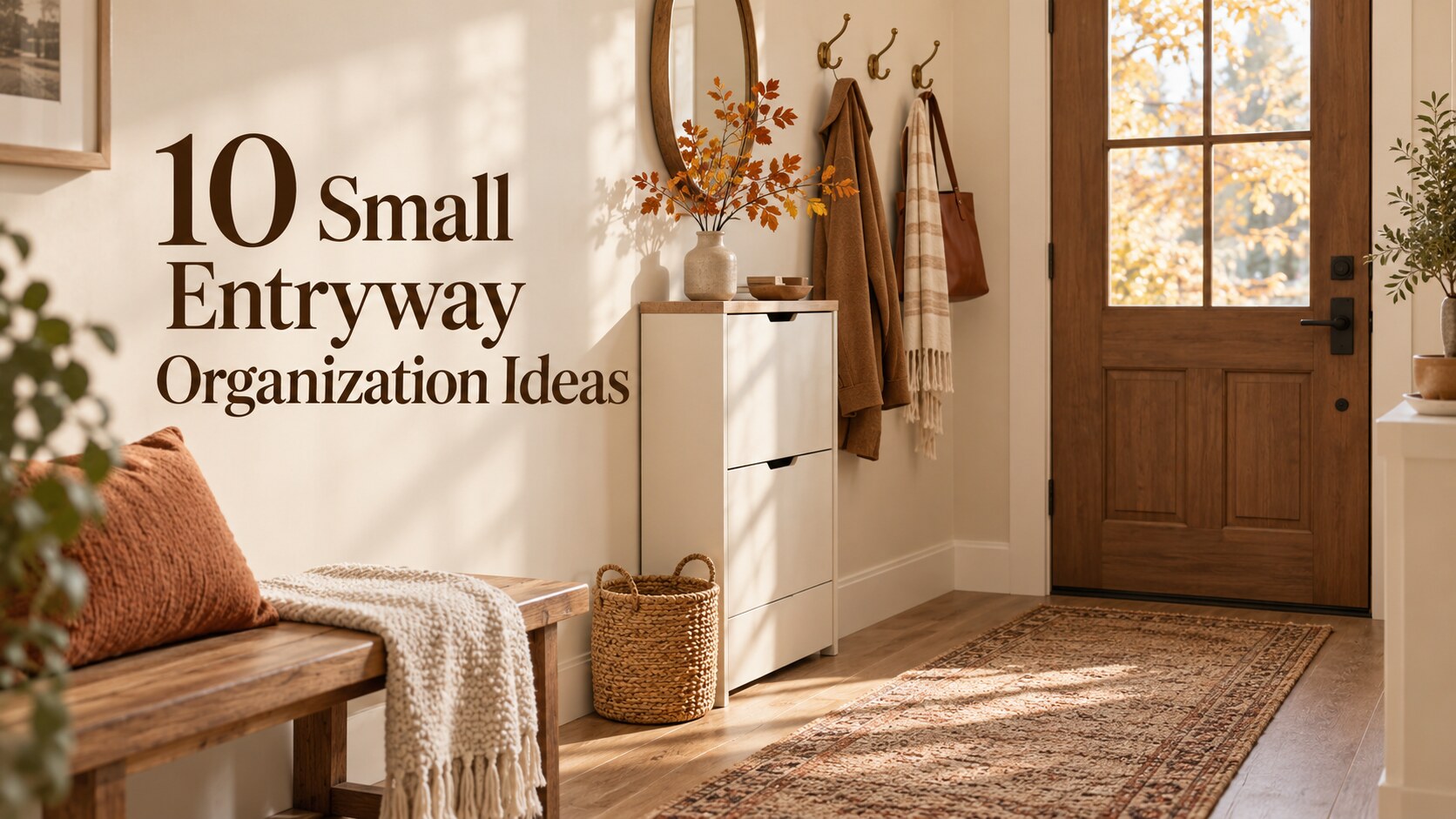
The goal is not to force a full mudroom into a tiny hallway. It is to create a simple landing zone that keeps daily essentials contained while making the entrance feel calm and welcoming. These ten small entryway organization ideas work especially well in apartments, rentals, and homes without a coat closet.
1. Decide What Actually Belongs by the Door
Begin with the items your household reaches for every day: current-season shoes, keys, one everyday bag per person, and the coats appropriate for the weather. Everything else can live in a bedroom closet or another storage area.
This first edit matters because even the best organizer cannot make an overflowing entryway feel spacious. Give the limited space to the items that make leaving and returning home easier.
2. Hide Shoes in a Slim Cabinet
Open shoe racks are convenient, but rows of visible footwear can make a narrow entrance look busier. A shallow cabinet uses vertical space and hides the visual clutter behind closed fronts.
The BORNOON shoe cabinet with three flip drawers is approximately 9.45 inches deep, making it a practical option for a hallway where a standard dresser or console would extend too far into the walkway. Measure the wall, baseboards, door swing, and walking clearance before ordering.
3. Add Hooks Without Creating a Coat Pile
Wall hooks keep jackets and bags off chairs and floors, but they work best when each hook has a clear purpose. Reserve them for the pieces currently in rotation instead of using them as permanent storage for every coat you own.
If your lease limits drilling, look for removable hooks rated for the weight you plan to hang and follow the surface instructions carefully. Lightweight art can also make the landing zone feel intentional; Command large picture hanging strips offer a tool-free option for suitable frames.
4. Turn the Back of a Door Into Bonus Storage
When wall and floor space are scarce, the back of a nearby closet or bedroom door can hold shoes, scarves, umbrellas, pet supplies, or other grab-and-go items. This keeps capacity close to the entrance without crowding the visible hallway.
The GORILLA GRIP over-the-door organizer has 24 fabric pockets and can organize far more than shoes. Avoid overloading it with heavy objects, and confirm that the door can still close comfortably after installation.
5. Create One Small Drop Zone
Keys, sunglasses, earbuds, and unopened mail need a destination the moment you walk inside. A small tray works well on top of a cabinet, while the 10-inch wooden key and mail holder with four hooks creates a compact wall-mounted home for mail, keys, sunglasses, or a dog leash without using floor space.
Keep the drop zone deliberately small. It should hold today’s essentials—not become a waiting room for receipts, paperwork, and objects that belong elsewhere.
6. Use a Basket for Soft, Awkward Items
A woven basket softens an entryway while containing items that do not stack neatly, such as scarves, reusable shopping bags, slippers, dog leashes, or cold-weather accessories. Choose one category for the basket so it stays useful instead of becoming a mystery bin.
For a larger entry or an open space beside a bench, the OIAHOMY 75L woven basket provides generous storage with a warm, decorative look. In a very narrow hallway, use the same idea with a smaller basket that fits on a shelf.
7. Choose a Bench That Earns Its Footprint
A place to sit makes shoes easier to put on, but a bench should not block the path. In a compact entrance, choose a narrow style with open space for baskets or enclosed storage for accessories.
If there is not enough room for a full bench, the ALASDO foldable storage ottoman can serve as a small seat, footrest, and hidden container. Its compact size also makes it easy to move when the entry needs more walking room.
8. Use a Floating Shelf When Floor Space Is Gone
A shallow wall shelf can replace a traditional console by holding a key tray, small lamp, plant, or a few decorative pieces. Mount it high enough to avoid bumps but low enough to remain convenient.
The Amada floating shelves come as a set of three, so one can serve the entryway while the others add storage elsewhere. Because they require installation, confirm your lease rules and use hardware appropriate for the wall type.
9. Make the Entry Feel Larger With Light and Reflection
A runner visually defines a small entryway while protecting a high-traffic floor. The RELEANY washable 2-by-6-foot runner rug adds warm brick, brown, and green tones that work beyond fall, while its washable design suits everyday dirt near the door. A mirror can reflect light and provide a quick check before leaving, and a small rechargeable lamp or warm overhead bulb can keep a windowless hallway from feeling cramped.
Keep decorative objects restrained. One mirror, one lamp, or one seasonal branch arrangement will usually have more impact than several small accessories competing for attention.
10. End the Day With a Two-Minute Reset
An entryway stays organized when putting things away requires almost no effort. Return shoes to the cabinet, hang the current coat, move mail to its next destination, and place keys back in the tray.
If the reset regularly takes longer than two minutes, the system may be holding too many items or asking you to complete too many steps. Simplify it until the tidy version is also the easy version.
Build a Welcome That Works for Real Life
A small entryway does not need matching built-ins or a major renovation. It needs a clear boundary, a home for daily essentials, and enough breathing room to walk through the door comfortably. Start with the clutter that lands there every day, then choose only the storage that solves that specific problem.
For more practical small-space solutions, explore our guides to hiding clutter in a small apartment, making a rental feel like home, and making a small living room look larger.
Leave a Reply